Posted on 30-05-2025 06:17 AM
1.5-Cuisine & Cookware-the Bengal connection and cultural legacy that we can’t ignore
Research & compilation: Dr Pawan Vaidya-5/2025
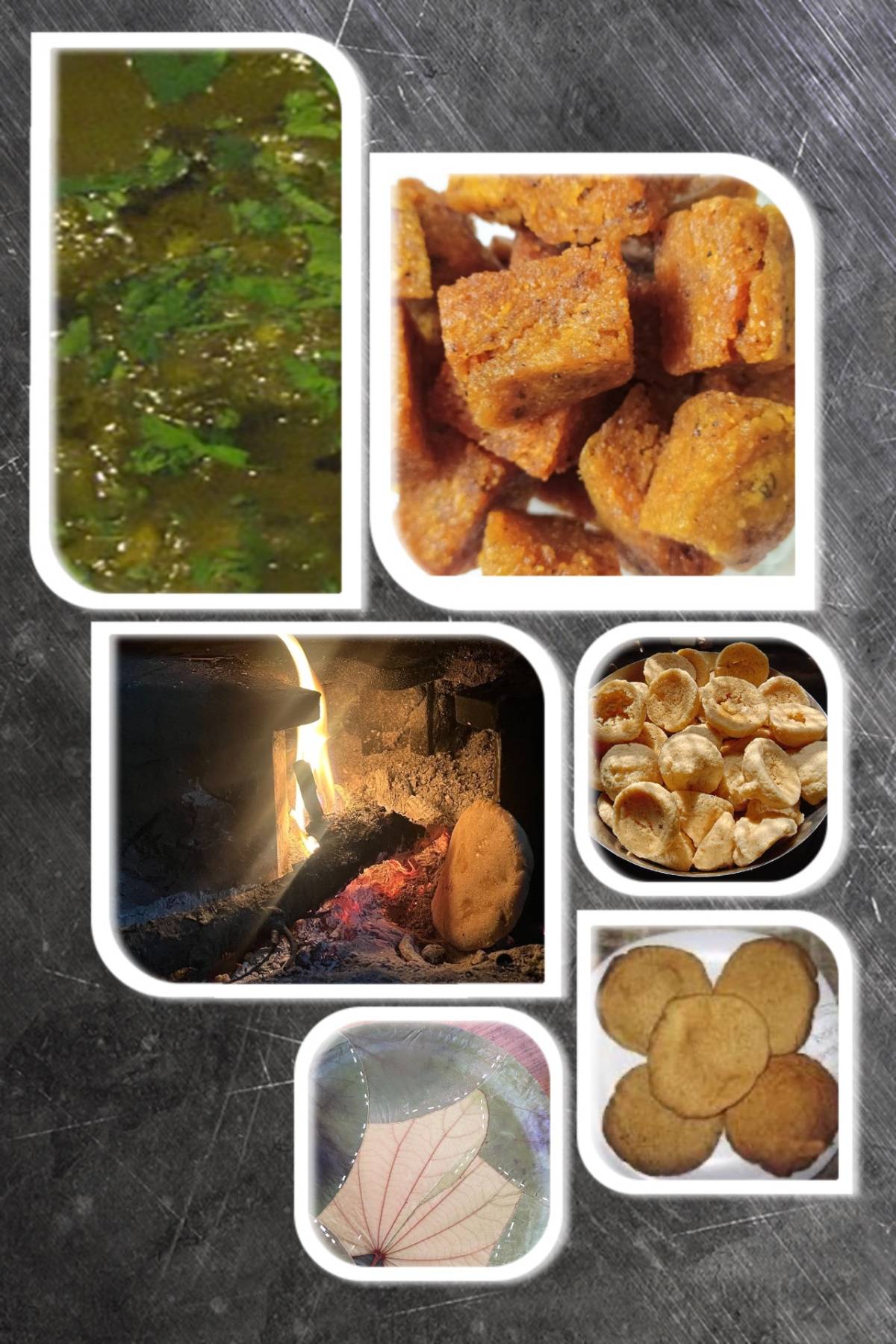
Ever wondered why your homemade sabzi by dadi’s, nani’s, mummy’s, chachi’s, bua’s and masi’s taste the same? The answer often lies in, ‘Ghar Ka Khana’, the cultural identity of homeland cuisine & cookware.
There are iconic dishes in Mandi cuisine that lends the community a unique identity and reflection of their homeland. The cuisine & cookware may have acquired Persian or Punjabi touch but the essential taste/flavour continues.
Bari or Barian is an integral part of Mandi cuisine with its umpteen variations such as Sepu Bari, Ali Bari, Mukund Bari, Muchh Bari, Fullbori, Khadi Bari etc, like several Bori forms in Bengali cuisine. Importance of Barian can be judged from village names such as Phul Bariyan and Muchh Bariyan in north Bengal giving credence to origin of this ancient spatiality.
Among all this, Sepu Bari is the most famous, without which popular Mandi Dham does not qualify to be Dham (Community food). Sepu Bari are the lentil dumplings made from a paste of soaked urad dal, steamed and fried to prepare a spiced Currie relished with steamed rice (Bhaat-the term derived from the cooked rice that releases steam-the bhaapa rice - to be Bhaat in mandiali and Bengali). Though origin of Sepu Bari has been listed as ‘sepian Bari’ in Sindhi cuisine but migrant Vaishnav community popularised it in ancient Sena kingdom of Bengal.
Patrodu is another tasty seasonal dish famous with Mandi cuisine. Its origin too is in Sindhi cuisine and its variations of Odia patrapoda or Bengali paturi (Channer Paturi). The fresh big size Arbi (Colocasia esculenta) leaves are smeared with spiced besan (channa flour) paste, steamed, sliced into pieces, fried in mustard oil to eat as snack or prepared as spicy Currie.
Malpua is a classic recipe on all important festivities and its origin too is from Bengal. Malpua is fluffy, light, deep-fried pancakes. The perfect fried Malpua is soft and a little thick in the middle with thin, crispy edges, While Babru is a fried flat wheat flour puri with fillings either sweet or savory.
Kachori (Kachuri or Kalai roti in Bengali), the most popular food made of rice/wheat flour bread filled with spiced urd dal (Mashkalai dal in Bengali) paste, eaten either oil fried / tawa roasted, has its origin in north Bengal. Of late, Shops selling Kachori Roti can be seen almost everywhere and is most consumed food in Mandi town.
Dal-Bhaat is the popular daily meal of Mandials-the largely vegetarian Vaishnav community as against meat and maize bread meal by hill folks. Historically, Dal & rice became major calorie source for vegetarian population in Bengal as a substitute for fish and meat due to emergence of followers of Vaishnavism especially during reign of Sen kings of Bengal.
Mandi cuisine is not much different from Bengali cooking such that majority of recipes begin with good pungent mustard oil chhonk of dhone (coriander seeds), Peepli (whole chillies), jeera (cumin seeds), methi (fenugreek seeds) and hing (asafoetida) without onion&garlic. To enhance flavour and taste, a wide variety of whole spices such as laung( cloves), cinnamon (kababchini/Dalchini), cardamom (boro elach), nutmeg (jayphol) and mace (joyitree) powder mix-the gorom moshala is used. Many vegetable dishes (torkaris) are finished with a dollop of ghee and some gorom moshala at the very end like in Bengali cooking.
Some other popular dishes similar to Bengali cuisine are Luchi, Bundiya and posto baingan, Falooda, shahi jilapi and shemain (hand made wheat flour semolina).
Even the sequence of eating meal has been to start with sweet dish(Bundiya) followed by salty dishes(Sepu Bari/other Currie) and end with spicy sour (kaddu Khatta), mash dal and bitter spiced chhachh (Jhol) dishes, a practice still followed in Mandi dham.
Pattal (Leaf), an important food ware has been widely used to plate food in many parts of country including Bengal. Historically Bengalis usually ate in plates made from dried sal leaves sewn together. Pattal made of Bauhinia variegata (Taura re Patte) leaves sewn together are still popular to serve food by Mandi community.
Other than the Pattal being an important food ware there are many kitchen vessels/tools similar to a Bengali kitchen. Utensils for cooking, storing and serving food were generally made of clay(earthen), kansa (bellmetal), pital (brass), tamba (copper) and loha (iron) in contrast to modern steel, aluminium, glass and ceramic. For regular daily use, Earthenware was considered the safest and a tin (Kalai)coating was highly recommended while using copper utensils. It was feared the metal utensils spread diseases or react with cooked food and render them poisonous.
Associated to cuisine is the look-alike cookware that is similar in shape or sound to a typical Bengali household. A few characteristic examples of cookware in Mandiali kitchen are
A Kadhai (korai in Bengali) is a cooking vessel for most Bengali sauces and stir-fry. The Dekchi (a flat-bottomed pan) is used generally for larger amounts of cooking or for making rice. It comes with a thin flat lid - the Taski which is used also to strain out the starch while finishing up cooking rice. The tawa is used to make roti (Phulko in Bengali). The other prominent cooking utensil is wharu (Hari in Bengali) which is a round-bottomed pot-like vessel used for slow cooking especially mash dal. A flat metal spatula, khunti, is used often, along with Hata (scoop with a long handle-the ladle), Tentu (Khunti in Bengali)-a flat metal spatula used along with Hata, Jharna(jhanjri in Bengali) a round-shaped sieve-like spatula to deep-fry food, Shaneshi (shanrashi in Bengali)-pincers to remove vessels from the fire, the Ghotnu(ghuntni in Bengali)-wooden hand blender for puréeing, Darati (dao or da in Bengali)-a long curved blade on a platform held down by one or both feet, the wooden patrah belun (chaklah belun in Bengali) round pastry board and rolling pin to make phulka, the Shil Batta (shil nora in Bengali) which is a rough stone slab and grinding stone and khurdnu (kuruni in Bengali) used for grating.
How is it that several of the above recipes/cookware either are same or sound similar to Bengali cuisine, can’t be a mere coincidence but a historical link to Bengal.
Read More
- मण्डी रियासत के राजगुरु
- वल्लभ कालेज मण्डी बंद होने से कैसे बचा?
- 1.1-Mandi Community: Bengal connection that we can’t ignore-“a Series”-1.1
- 1.2-Mandi Community: Bengal connection that we can’t ignore-“the Migration”-1.2
- 1.3-Mandi Community: Bengal connection and the Cultural legacy that we can’t ignore-the Deity & devotion-1.3
- 1.4 - Clans & Names- the Bengal connection and Cultural legacy that we can’t ignore
- 1.5-Cuisine & Cookware-the Bengal connection and cultural legacy that we can’t ignore
- 156 साल पुराने बिजै हाई स्कूल के सबसे सीनियर छात्र
- Mandi What is in the Name?
- Mandipedia Archives
- एग्रीकल्चर का पीरियड-बैलों की जोड़ी-यू ब्लॉक का इतिहास
- कैसे हुआ था भारत आज़ाद मंडी शहर में
- चौहटे में बनी पादुका/पातका
- टारना मंदिर में पंचमुखी शिव
- दरबार हाल में नाटक मंचन
- ध्यानस्थ बुद्ध प्रतिमा
- पड्डल सस्पेंशन ब्रिज
- पत्थर पर पांव की प्रतिमा?
- पलाक्खा बाजार
- भूतनाथ मंदिर का अंगीठा
- मंडी रियासत का सरकारी जल्लाद
- मंडी शैहरा री सैर - समीर कश्यप एडवोकेट
- मण्डी के बरसेले
- मण्डी नगर की ऐतिहासिक धरोहर - घंटाघर
- मण्डी नगर की जीवन शैली में पान-लवों की शान
- मण्डी में तिलोपा की गुफा-कालखंड दसवीं शताब्दी।
- मण्डी में हुक्का पीने की प्रथा
- मण्डी रियासत का खतरी समाज-नाड़ी बैद/वैद्य-1
- मण्डी रियासत में स्वास्थ्य सेवाएं व चिकित्सक भाग-1
- रियासत कालीन चौकीनुमा भवन में बना गांधी भवन
- रियासत कालीन मण्डी की भोजन शैली,भाग-1
- रियासतकालीन चौहटा बाजार एवं खत्री व्यापारी:
- रियासतकालीन मंडी नगर की प्रकाश व्यवस्था
- रियासतकालीन मण्डी की लोहड़ी
- लकड़ी की कलात्मक रेलिंग(बिड़ंग)
- वल्लभ महाविद्यालय मण्डी- प्रथम कक्षा का प्रथम छात्र कौन?
- श्रीमति गायत्री देवी-प्रथम महिला अध्यापिका
- कोठड़/कोठड़ु
- कौहरा
- गांधी चौक मण्डी
- चौहटे में बनी पादुका/पातका
- जातरा में देव मिलन
- टारना में महामहिम दलाई लामा जी व पंचन लामा
- पंचवक्त्र मंदिर, मण्डी, हिमाचल प्रदेश -शिलालेख
- पत्थर पर पांव की प्रतिमा?
- पहाड़ी बोलियों की प्राचीन लिपि टांकरी
- पादुका या धम्मचक?
- ब्यास की व्यथा गाथा
- मंडी में सिनेमा संस्कृति के जनक-श्री रोमेश चंद्र
- मण्डी नगर की ऐतिहासिक धरोहर - घंटाघर
- मण्ड्याली गीत-छोटी काशी रे निवासी
- मसांत के भल्ले
- लकड़ी की कलात्मक रेलिंग(बिड़ंग)
- वंशावली को किन परिवारों ने सम्भाला?
- वल्लभ महाविद्यालय मण्डी- प्रथम कक्षा का प्रथम छात्र कौन?
- शताब्दी पुराना ताला-चाबी
- सर्दी का जन्म माताश्री की जुबानी
- वल्लभ कालेज मण्डी बंद होने से कैसे बचा?
- श्री यादवनन्दन मल्होत्रा-(लक्कड़ साहब)
- Himachal business- साक्षात्कार
- Law to Lyrics
- Mandipedia Archives
- NRIs Mandyal - श्री पुष्प राज कपूर
- Shri Chiranji Lal Malhotra
- Tribute to a scientific Luminary:Dr.Malhotra
- डा. नीना कपूर
- डॉक्टर चंद्रमुखी कपूर कपासी
- डॉक्टर चिरंजीत परमार
- डॉक्टर चिरंजीत परमार-फिल्म आनंद के जीवंत पात्र
- पंडित गौरी प्रसाद जी
- मंडी में सिनेमा संस्कृति के जनक-श्री रोमेश चंद्र
- मण्डी के साहित्यकार श्री किशोरी लाल वैद्य
- मानव स्वभाव-1
- श्रीमति गायत्री देवी-प्रथम महिला अध्यापिका
- गरी चीरने की दराटी
- वैद्य परिवार- घर,प्रौड़ व चौकियाँ-भाग-2
- 1.1-Mandi Community: Bengal connection that we can’t ignore-“a Series”-1.1
- 1.2-Mandi Community: Bengal connection that we can’t ignore-“the Migration”-1.2
- 1.3-Mandi Community: Bengal connection and the Cultural legacy that we can’t ignore-the Deity & devotion-1.3
- 1.4 - Clans & Names- the Bengal connection and Cultural legacy that we can’t ignore
- 1.5-Cuisine & Cookware-the Bengal connection and cultural legacy that we can’t ignore
- 1.6-Mandiali Dialect & Diction-the Bengal connection that we can’t ignore
- 1.7-Rites & Rituals-the Bengal connection and the Cultural legacy that we can’t ignore
- Gugga ji and Gugga-Jatra in Mandi Community
- Mandi What is in the Name?
- Secrets of Longevity in Mandi Community - 1.0
- Secrets of Longevity in Mandi Community-Daily Active Routines-1.1
- Secrets of Longevity in Mandi Community-Games of the Bygone Era-1.5
- Secrets of Longevity in Mandi Community-Hygiene & Health-1.3
- Secrets of Longevity in Mandi Community-Strong Social Connections-1.2
- Secrets of Longevity in Mandi Community-Traditional Indigenous Foods - 1.4
- Urban Planning: Lessons to learn from Mandi town
- एग्रीकल्चर का पीरियड-बैलों की जोड़ी-यू ब्लॉक का इतिहास
- डॉक्टर चिरंजीत परमार
- मंडी के फैशन
- मण्डी नगर की जीवन शैली में पान-लवों की शान
- मण्डी रियासत का खतरी समाज-नाड़ी बैद/वैद्य-1
- मानव स्वभाव-1
- रियासत कालीन भोजन शैली -भाग 2
- रियासत कालीन व्यंजनों(मरोलण) के नाम और प्रकार:
- रियासतकालीन चौहटा बाजार एवं खत्री व्यापारी:
- रियासतकालीन मण्डी की लोहड़ी
- रोड़ू (गरी के लड्डू)-4
- वैद्य परिवारों की धार्मिक परंपराएं-भाग-3
Reviews Add your Review / Suggestion
R P TANDON
30-05-2025 07:14 AM
Alice
02-06-2025 03:29 AM
ozzmmluudr
07-06-2025 12:25 AM
qosyjvssyg
16-06-2025 06:19 PM

